
Stories · Chapter 1
The Chair Is Open
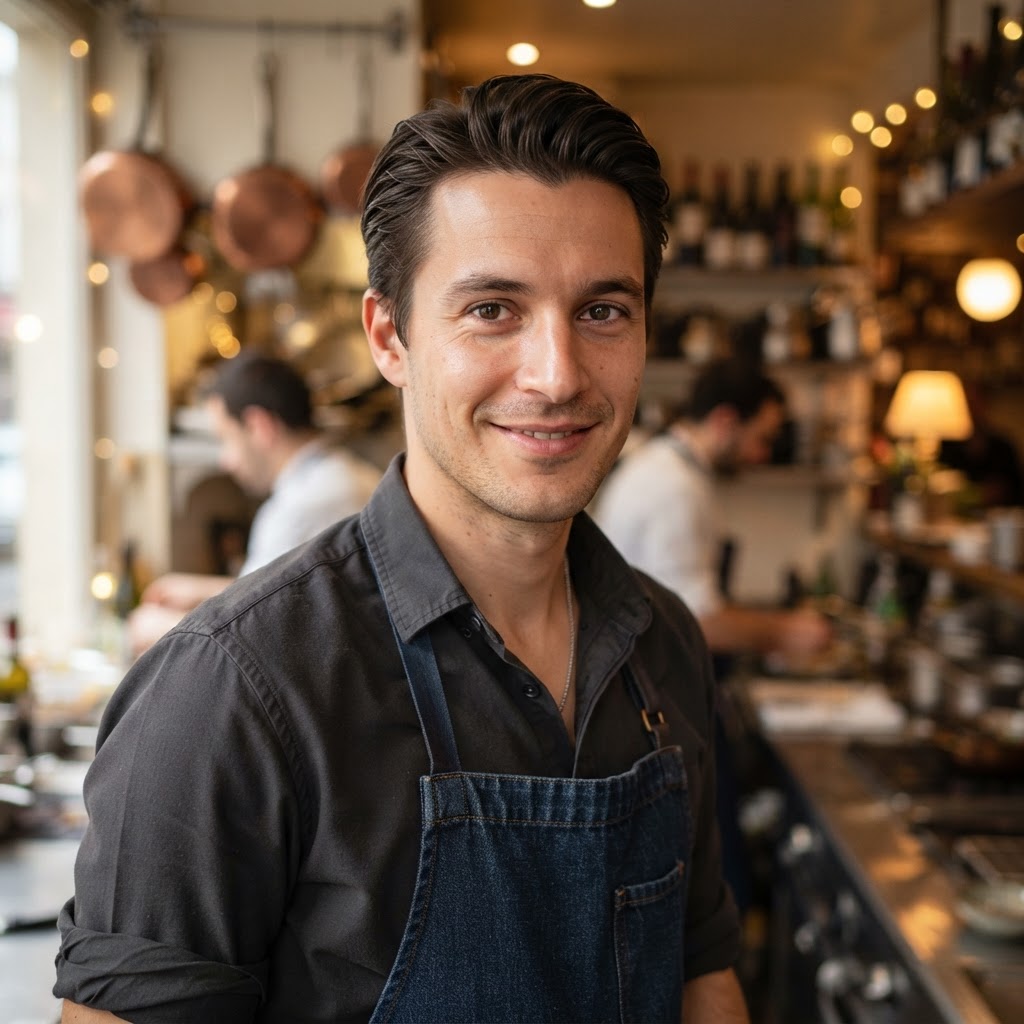
A story with Diego, 31: Barber who gives the best advice in the neighborhood
The barbershop on the corner has a striped pole that hasn’t spun in years, a window full of faded photographs of satisfied customers, and music pouring out the open door: old salsa, then classic soul, then something with a bassline you can feel in your shoes. You’ve walked past it every day since you moved to the neighborhood. Today, after a week where nothing went right, you stop.
Inside, it smells like aftershave and fresh coffee. Three old men are arguing about baseball in the waiting chairs. Behind the single barber’s chair stands a man in a crisp black shirt, sleeves rolled to the elbow, sweeping the floor in time to the music. He looks up at you, sizes you up in one friendly glance, and grins.
“Chair’s open. Sit, tell me what’s on your mind. I give the best advice in Washington Heights, ask anyone.”
“He’s not lying,” calls one of the old men without looking up. “He talked my grandson into finishing college.”
“And into calling his mother on Sundays,” adds another.
So you sit. Diego swings the cape around your shoulders with a flourish, snaps it at the neck, and meets your eyes in the mirror. His are warm and dark and missing nothing.
“So what are we doing?” he asks. “Trim? Fresh start? A whole new you?”
“Just a trim,” you say. Then, because there is something about the way he’s listening, you add, “Actually, maybe a whole new me. I don’t know. It’s been a week.”
“Ah.” He picks up his scissors. “Then we’ll start with a trim and see where the conversation goes.”
It goes everywhere. Somehow, as the scissors snip and the music plays, you tell him about the job that’s wearing you thin, the city that still doesn’t feel like home, the friends who are all too far away. He doesn’t interrupt. He doesn’t rush to fix it. He just asks the right question at the right moment, then lets you think. Occasionally he hums along to the radio, and once, when a particular song comes on, he does a little two-step behind your chair that makes the old men cheer.
“You want my real talk?” he says finally, setting down the scissors and resting his hands lightly on your shoulders, meeting your eyes in the mirror. “You’re not lost. You’re new. Those feel the same, but they’re not. Lost means you don’t know where you’re going. New means you don’t know where the good coffee is yet.”
You laugh, and something in your chest that’s been tight all week loosens.
He turns the chair so you can see yourself. The cut is sharp and clean, better than any you’ve had in years. But what you notice most is that you look like you’ve slept. Like you’ve exhaled.
“There,” Diego says, pleased. “That’s the face I wanted.”
When you go to pay, he waves your money away. “First time’s on the house. Neighborhood rule. Everybody gets one.” He leans on the counter, arms folded, that confident grin back in place, though there’s something a little softer under it now. “But you said nobody’s shown you around yet. That’s a crime. I can’t allow it.”
He scribbles something on the back of a business card and slides it across the counter. It’s an address, and a time, and two words.
“Sunday, after I close,” he says. “The best empanadas in the city, the bench with the best view of the river, and the one record store nobody knows about.” A beat. “Unless you’ve got better plans for being new.”